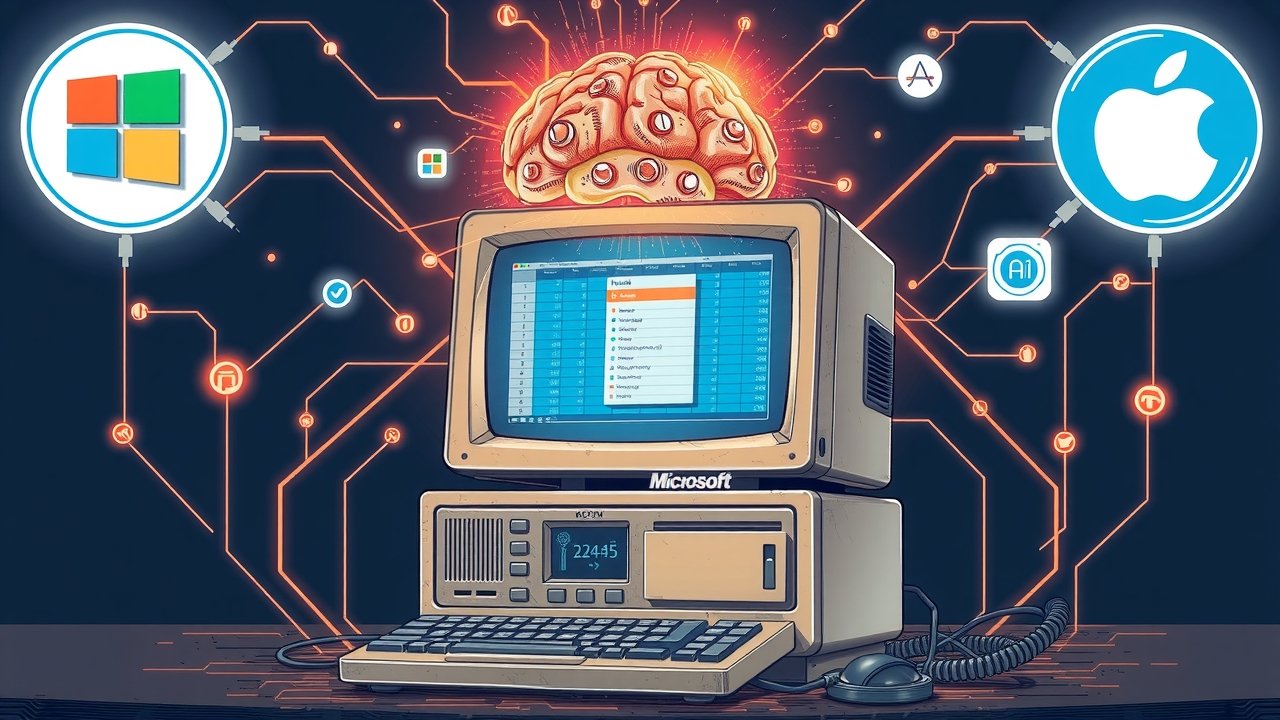
Perplexity CEO: Microsoft invented office workers to sell software
A massive corporate truth bomb has just dropped, revealing that the entire concept of white-collar office labor might be nothing more than a giant marketing campaign designed to sell software licenses to unsuspecting businesses.
During a chat on Joe Rogan's podcast, Perplexity CEO Aravind Srinivas laid out a theory that the modern corporate drone is an artificial ecosystem carefully constructed by Microsoft. He argued that Bill Gates aimed to put a personal computer on every desk, effectively gluing employees to screens for decades to come.
According to this view, generations of workers trained themselves in Word and Excel just to get hired, while companies paid massive licensing fees to Redmond. This loop created a massive digital sweatshop of spreadsheets and emails that eventually migrated to the cloud, making Microsoft unimaginably wealthy while masquerading as essential human progress.
This strategy was contrasted with Steve Jobs, who focused on beautiful, intuitive design. Microsoft, however, supposedly focused purely on scale and lock-in. This history lesson justifies the current AI revolution, with Srinivas arguing that the death of mundane office tasks is not a tragedy but a long-overdue liberation.
While social media algorithms rot brains through endless scrolling, AI assistants are framed as intellectual companions. To prove the point, MIT biology students are now using Perplexity in class, where they are graded not on their answers, but on their ability to ask questions that the AI cannot actually resolve.
So, decades of corporate culture boil down to a glorified product-placement campaign for office suites. With AI threatening to vaporize these artificial roles, the corporate world faces a choice between inventing new forms of digital busywork or admitting that the spreadsheet empire has finally fallen.
Source: YouTube
Comments
This is where the magic happens: AI reads your discussion and rewrites the article based on the most interesting comments. Each strong comment adds points to the meter below. Once the meter is full, the article updates live — no page reload needed.