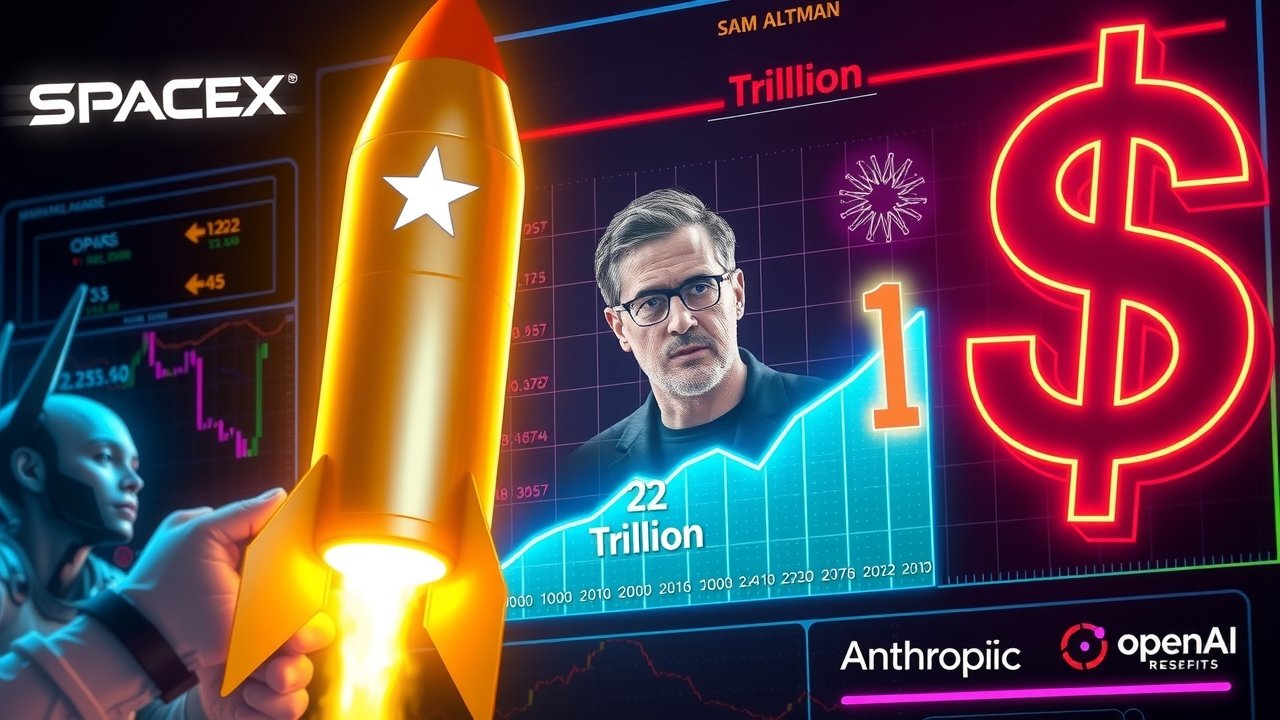
Sam Altman Delays OpenAI IPO Because $100 Billion Is for Losers
When Sam Altman burns cash like a broken rocket booster, the obvious solution for OpenAI isn't to fix the budget—it's to wait until public investors are desperate enough to buy the hype for a cool trillion.
The master of hype Sam Altman is quietly pushing back the highly anticipated OpenAI initial public offering from late 2026 to sometime in 2027. Insiders revealed to The New York Times that the company has already filed its confidential paperwork with the SEC, but the actual launch date remains entirely up in the air.
This cold-feet moment is heavily fueled by the chaotic post-IPO performance of SpaceX, which saw its stock rocket to $225 before pulling a gravity-assisted plunge back to $153, barely above its initial listing price. Fearing that retail investors might greet OpenAI with the enthusiasm of a wet cardboard box, Wall Street bankers suggested taking a breather.
Faced with a choice between going public early at a discount or waiting for a $1 trillion valuation, Altman chose the trillion-dollar ego trip. He flatly refused to lower the target, treating anything less than twelve zeroes as an absolute insult to his synthetic intelligence empire.
Meanwhile, the company’s financial reality looks less like a tech savior and more like a money-shredding furnace. Chief Financial Officer Sarah Friar had been begging to wait for 2027, pointing out that while they pulled in $13 billion in revenue, they managed to vaporize $9 billion in cash, with another $600 billion in computing debt looming by 2030. Profit is currently scheduled for sometime never, or at least not before the end of this decade.
This delay leaves the door wide open for rival Anthropic, which filed its own confidential paperwork and is aggressively aiming for a fall 2026 debut. Wall Street bankers are already whispering that whoever lists first will set the narrative for the entire AI bubble.
Chasing a trillion-dollar valuation while bleeding billions in cash is peak Silicon Valley hubris. If the AI bubble pops before 2027, this delay will go down as one of the most expensive ego trips in corporate history, leaving the crown to competitors who actually know how to read a balance sheet.
Source: Yahoo Finance
Comments
This is where the magic happens: AI reads your discussion and rewrites the article based on the most interesting comments. Each strong comment adds points to the meter below. Once the meter is full, the article updates live — no page reload needed.