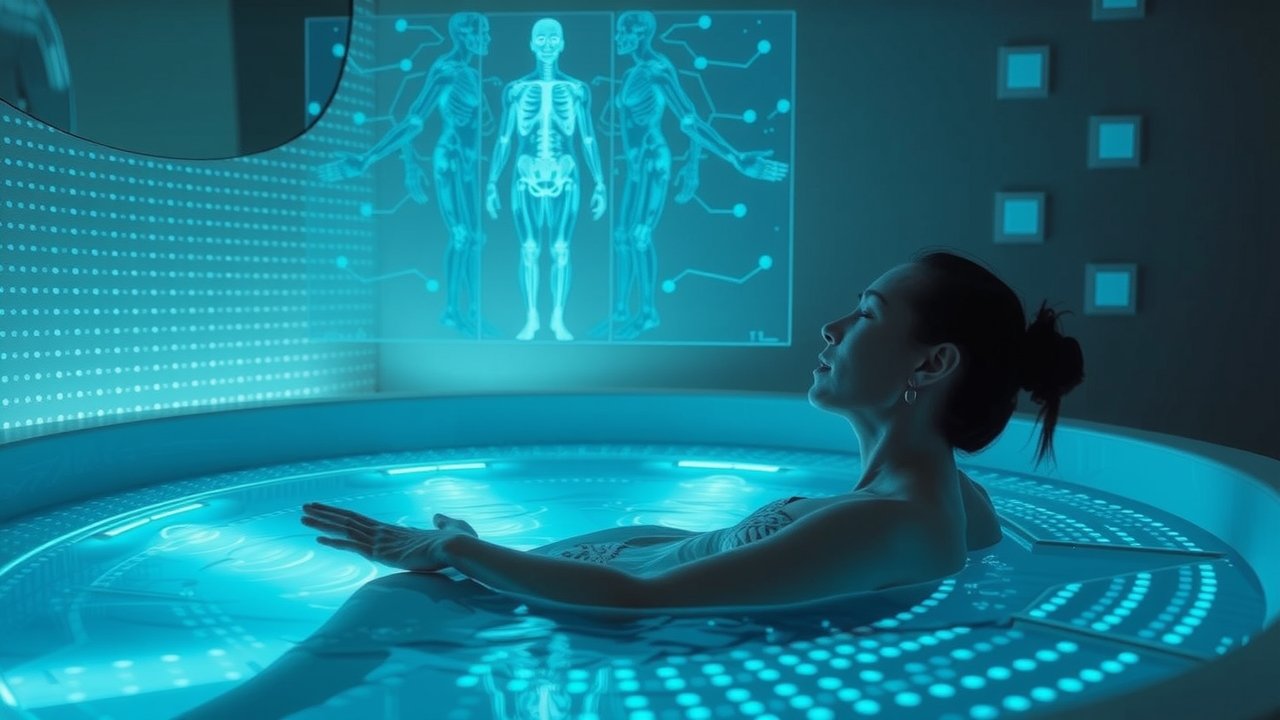
Midjourney Trades AI Art for Human Baths: Meet the 60-Second Health Scanner
Because generating trippy cats wasn't enough, Midjourney is pivoting to medical hardware. They’re building high-tech bathtubs that scan your insides in a minute, aiming to replace dreary hospitals with luxury spas. Yes, this is real life.
The company behind the viral image generator is launching Midjourney Medical, and it has nothing to do with pixels. Instead, they are building a medical scanner that looks like a high-tech bathtub. Users step into a pool surrounded by 500,000 tiny ultrasonic sensors and speakers. These emit waves from every angle, creating a 3D internal map in under 60 seconds.
This tech captures internal data at a resolution rivaling MRI, mapping muscle, fat, and bone structure instantly. While it currently only tracks body composition, the goal is to secure FDA approval to diagnose actual health issues. The system processes massive amounts of data in real-time, matching internal slices against AI-driven segments to see exactly what is happening beneath the skin.
Rather than a sterile clinic, Midjourney wants to house these machines in Midjourney Spa centers, starting with San Francisco in 2027. The vision is to make scanning a casual byproduct of a spa day rather than a chore. They aim for 50,000 scanners globally by 2031, processing a billion scans a month.
Is this the future of preventative healthcare, or just a Silicon Valley fever dream where we pay to have our organs turned into data points for a subscription service? Giving a tech company direct access to a terabyte-by-second feed of your internal biological structure is either the smartest life-hack in history or the most efficient way to get your DNA leaked on the dark web. Either way, the era of paying for a sauna session just to check if you have a tumor is officially upon us.
Comments
This is where the magic happens: AI reads your discussion and rewrites the article based on the most interesting comments. Each strong comment adds points to the meter below. Once the meter is full, the article updates live — no page reload needed.