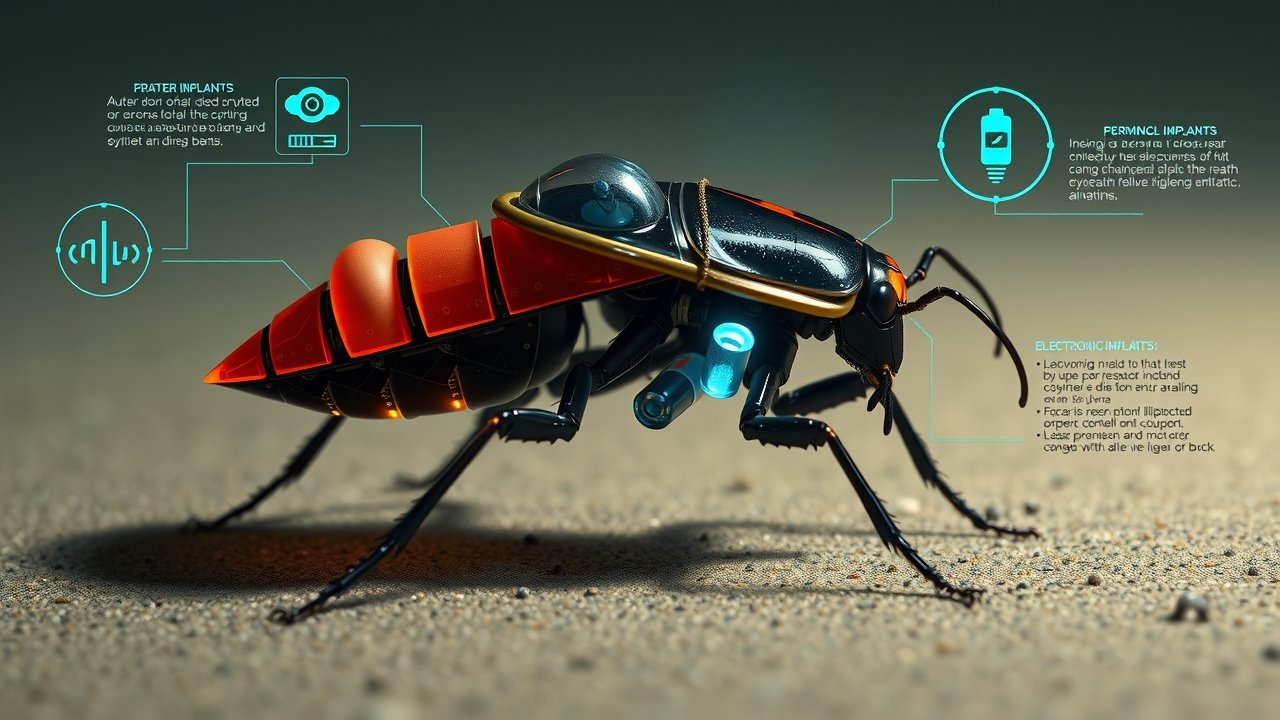
Cyborg cockroaches get 3D-printed scuba suits for underwater search missions
Just when you thought your nightmares were safely confined to dry land, science decides to give our favorite indestructible pests a diving license. These little bio-hybrid monsters are officially ready to conquer the deep.
Researchers at the Nanyang Technological University in Singapore have been hard at work turning giant Madagascar hissing cockroaches into remote-controlled search-and-rescue minions.
The team, led by Hirotaka Sato, previously figured out how to steer these beasts using electrodes wired into their sensory organs, but flooded disaster zones remained a no-go zone until now.
Instead of building complex micro-robots that break if they look at water wrong, the team realized nature already built the perfect rugged chassis; it just needed some wet-weather gear.
To solve the drowning problem, the scientists 3D-printed tiny waterproof resin backpacks. Cockroaches breathe through pores on their bodies, so the suit seals off their rear breathing holes while running tiny oxygen hoses directly to their chest.
Because squeezing a heavy scuba tank onto a bug is a great way to make a very slow anchor, the backpack uses a chemical reaction. A mix of hydrogen peroxide and manganese dioxide drips together on the fly to generate fresh, breathable oxygen.
During testing, the fully suited cyborgs successfully navigated water up to 50 centimeters deep for three hours straight. Even more terrifyingly, their underwater speed barely dropped, letting them crawl at a brisk 78.4 millimeters per second compared to their usual dry-land pace.
The researchers are currently preparing to test these armored bugs in extreme temperatures and radiation to see if they could survive on Mars, though space agencies are already sweating over the risk of accidentally colonizing the red planet with terrestrial sewer microbes.
Whether they end up saving lives in collapsed buildings or starting a new civilization on Mars, one thing is certain. Humanity has officially weaponized the only creature capable of surviving a nuclear blast, and now they can swim. What could possibly go wrong?
Source: New Scientist
Comments
This is where the magic happens: AI reads your discussion and rewrites the article based on the most interesting comments. Each strong comment adds points to the meter below. Once the meter is full, the article updates live — no page reload needed.